
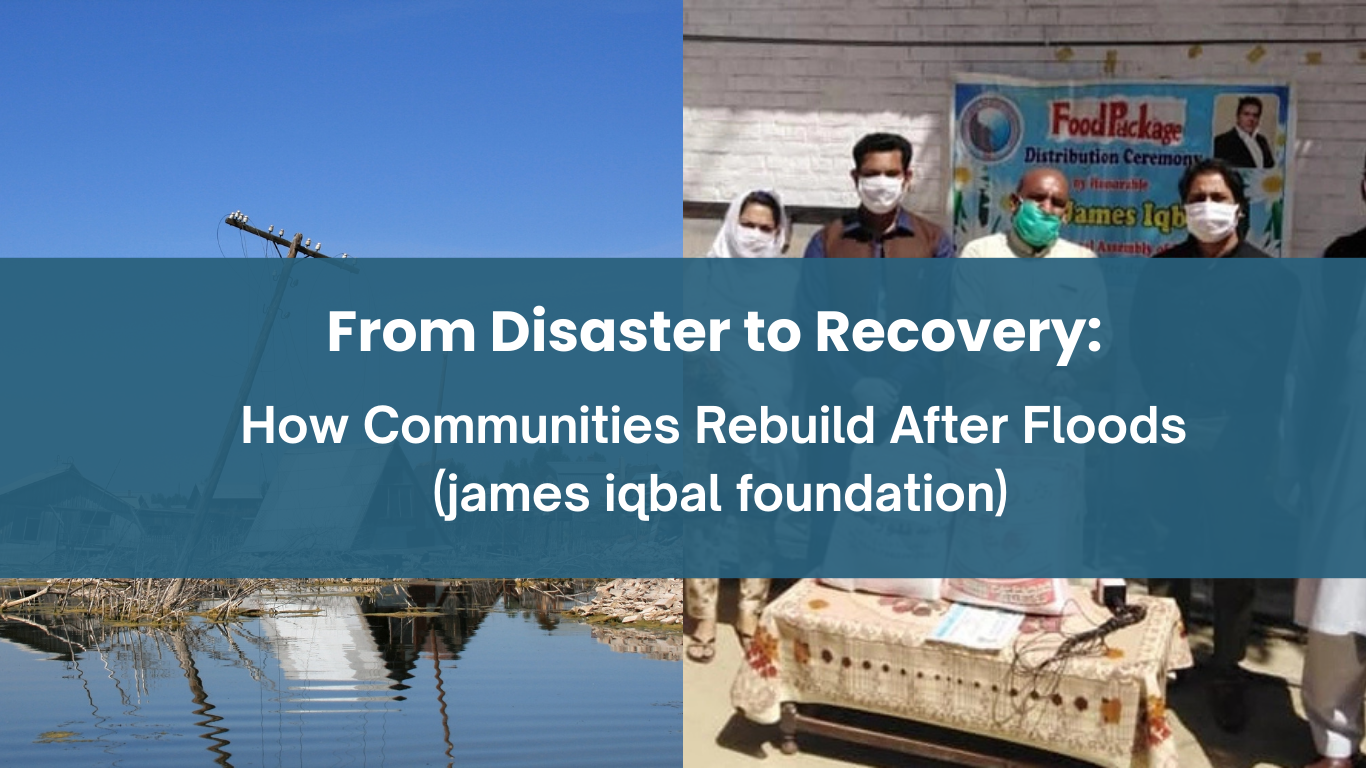
From Disaster to Recovery: How Communities Rebuild After Floods
Floods devastate lives, livelihoods, and entire communities in a matter of hours. Yet recovery is possible and when guided by resilience and inclusion, it can transform hardship into opportunity. The James Iqbal Foundation is committed to ensuring that recovery after floods is not just about rebuilding, but about building back stronger and fairer.
What is the James Iqbal Foundation ?
The About page of JIRFP outlines our mission: restoring dignity, health, and opportunity for vulnerable populations. As a humanitarian organization, we focus on disaster response, health, education, and peace initiatives, always prioritizing the most marginalized communities.
Why Post-Flood Recovery Matters
Floods leave behind more than visible destruction. They cause:
Displacement: Families lose their homes and must seek temporary shelter.
Economic loss: Crops, livestock, and small businesses are wiped out.
Health risks: Stagnant water spreads disease, while damaged clinics hinder treatment.
Education gaps: Schools close, disrupting children’s futures.
JIRFP works to bridge these gaps, ensuring communities can recover fully and sustainably.
How the James Iqbal Foundation Helps Communities Rebuild
Emergency Relief & Disaster Response
The first step after flooding is immediate relief providing safe shelter, food, clean water, and medical support. JIRFP mobilizes rapid response teams to reach affected families quickly.
Healthcare Programs
Floods often trigger outbreaks of waterborne diseases. Our health initiatives deliver emergency medical care, mobile clinics, and health awareness campaigns to protect vulnerable populations.
Education and Empowerment Projects
Recovery is not just physical it’s also social. By restoring schools, supporting teachers, and empowering young people with skills, JIRFP helps communities secure long-term resilience.
Peace and Reconciliation Efforts
Disasters can create tensions when resources are scarce. JIRFP fosters unity and peacebuilding efforts to strengthen community ties during recovery.
Steps Communities Take in the Recovery Journey
Rebuilding Homes and Infrastructure
Safe housing, raised on stronger foundations, reduces vulnerability to future floods. Roads, bridges, and drainage systems must also be reconstructed with resilience in mind.
Restoring Livelihoods
From replanting crops to reviving small enterprises, economic recovery is vital. JIRFP supports community-led livelihood programs to help families regain independence.
Mental Health and Social Support
Floods cause trauma that lasts long after the waters recede. Counseling, community gatherings, and support groups play an important role in healing.
Common Questions About Recovery
Q:How are donations used?
Every contribution is directed transparently into programs that provide food, shelter, medical care, and rebuilding support. You can learn more or get involved through our Contact page.
Q:Is JIRFP focused only on one region?
No. While JIRFP responds to floods and emergencies in Pakistan, our principles of dignity, equity, and resilience apply universally to vulnerable communities.
For examples of past recovery initiatives, visit this detailed blog where we share real stories of how families rebuild after disaster.
Conclusion
From disaster to recovery, the path is long but it is also filled with hope. Flood recovery is not just about restoring what was lost; it’s about creating safer homes, healthier communities, and stronger futures.
The James Iqbal Foundation is more than a relief organization it is a beacon of resilience and justice. By supporting this mission, you’re helping families rebuild lives, restore dignity, and create lasting change.